


TL; DR
AI is set to reshape crypto, with bots projected to handle $30B in daily trades by 2025.
They work off four signals, sentiment, order books, volatility, and fractal patterns, spotting opportunities faster than humans.
The edge is nonstop coverage, emotion-free execution, and split-second trades. Still, risks like black swans, thin liquidity, fake news, and overfitting can cause major losses.
Research shows AI boosts returns by 10–15%, especially when paired with human judgment.
Analysts expect half of trading desks to run on AI by 2026, though flash crashes and regulation loom.
For traders, the safest path is starting small, testing tools, and keeping risk capped.
The AI Crypto Trading Wave
Can artificial intelligence really predict the next Bitcoin breakout? It’s a question that’s moved from Reddit threads to serious hedge fund meetings, and the answer is more complicated than most AI hype would have you believe.
AI-driven trading isn’t just theory anymore. By 2025, AI-powered systems are projected to handle over $30 billion in daily crypto trading volume. From machine learning crypto signals scanning millions of tweets per second to bots executing trades in milliseconds, algorithms are now a core part of how digital assets move.
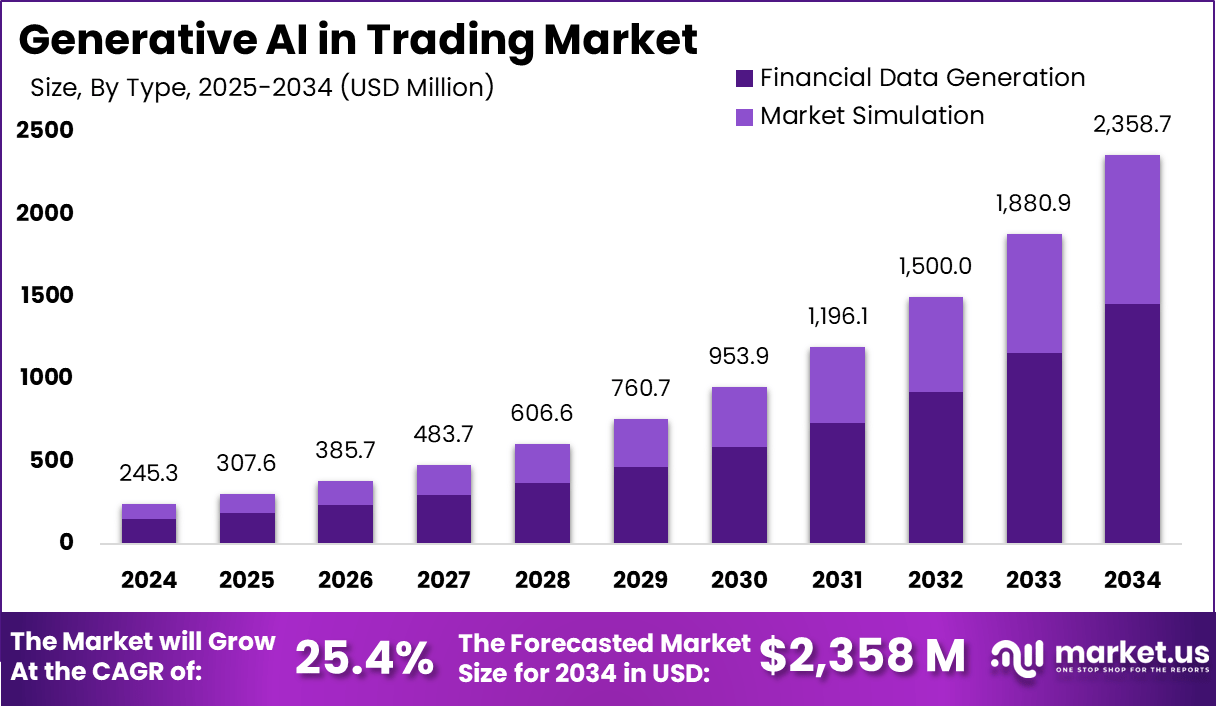
Figure 1: Generative AI in Trading Market Size Projection, 2024-2034 (Source: Market.us, 2024)
For traders, this feels like a game-changing edge. AI promises speed, data-driven precision, and emotion-free decision making, but it’s not foolproof. Crypto AI tools can misinterpret fake news, overfit to past data, or collapse when markets swing violently. The first AI bot I tested nailed six winning trades in a row, then misread a false breakout and wiped 10% of my account in under two hours. That’s the double-edged sword of trading automation crypto. It has massive potential, but very real risks.
This guide is built as a practical playbook for AI crypto trading strategies in 2025. You’ll learn:
The signals that consistently deliver, from sentiment analysis to order book depth.
The crypto AI trading limitations you need to watch for.
How to test AI trading bots safely without blowing up your portfolio.
By the end, you’ll know where AI gives you a measurable edge, where it still fails, and how to build a smarter, safer approach to algorithmic trading with AI.
Ready to find out which AI crypto trading strategies in 2025 are worth your time, and which ones to ignore? Let’s begin.
Decoding AI Signals in Crypto Trading
If you’ve ever wondered how an AI trading bot decides when to buy or sell, here’s how. At its core, an AI system is a signal engine. It absorbs massive amounts of market data, detects patterns that humans would likely miss, and translates them into trading instructions. For new traders, it’s like having a hyper-focused analyst working 24/7. For pros, the real difference is in speed, scale, and the accuracy of crypto trading signals.
However, not every signal is created equal. Let’s break down the core signals that AI crypto trading strategies in 2025 rely on; the same ones driving both retail bots and hedge fund-level quant models.
Four Core Signals AI Relies On
1. Sentiment Analysis: Reading the Market’s Mood
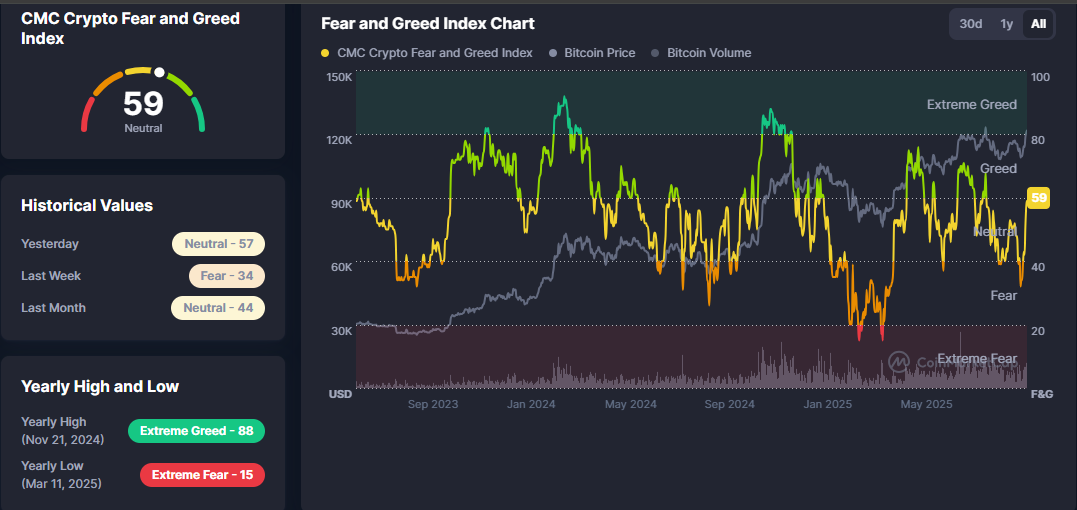
Figure 2: Crypto Fear & Greed Index (Source: CoinMarketCap)
Crypto is fueled by emotion as much as math. AI models scan millions of tweets, Reddit posts, Telegram messages, and news headlines to gauge market sentiment in real time. When hype spikes around Bitcoin or Ethereum, AI bots often front-run those shifts. According to Cointelegraph, sentiment-driven trading strategies outperformed pure trend-following bots by about 8% in 2024. This makes sentiment one of the most effective tools for predictive analytics in crypto and a staple for traders using AI risk management in trading.
2. Order Book Depth: Following Real Liquidity
The order book, buy and sell walls stacked on exchanges, is where hidden clues live. Machine learning crypto signals can detect subtle liquidity imbalances long before human traders notice. Example: a sudden surge of buy orders on Binance’s BTC/USDT pair often signals a breakout. TensorTrade, an open-source platform, specializes in parsing these micro-shifts and turning them into actionable trades. For traders chasing AI edge in volatile markets, order book depth is a must-watch signal.
3. Volatility Clusters: Anticipating the Next Move
Crypto doesn’t move in smooth curves. It jumps in clusters. AI is particularly skilled at identifying these bursts of volatility. Deep learning in crypto markets can forecast when ETH is likely to swing 5%+ within hours. This gives traders time to adjust stops, hedge positions, or ride the move. More importantly, it’s a powerful component of AI risk management in trading, as volatility often creates both the biggest gains and the fastest losses.
4. Fractal Patterns: When History Repeats Itself
Markets often repeat behaviors across different timeframes. A pattern on the hourly chart may mirror one on the daily. AI models dig into these fractal structures to forecast potential moves. Hedge-fund-level projects like Numerai and retail-friendly TradingView AI bots both leverage this approach. While not perfect, fractal analysis has become increasingly popular among traders seeking crypto signal accuracy AI can provide. In hybrid trading models (AI and human oversight), fractals often act as confirmation signals rather than sole triggers.
List of Tools Traders Use
These are the platforms traders rely on:
Numerai → A hedge-fund-backed competition where thousands of data scientists build predictive models for crypto and equities.
TensorTrade → An open-source framework for designing reinforcement learning bots and testing algorithmic trading with AI.
TradingView AI Bots → Retail-friendly solutions for experimenting with machine learning crypto signals directly on charts.
Some of these tools deliver impressive performance when market conditions align. Others collapse when exposed to the chaos of crypto. The difference usually lies in how well they are trained, the data they rely on, and whether traders use them with proper AI risk management strategies.
If you had to choose one AI signal to trade with, sentiment, order book, volatility, or fractals, which would you trust most?
Why Traders Trust AI in Crypto Trading
So why are more traders turning to AI when it comes to managing crypto positions? The answer comes down to three things: relentless coverage, emotion-free execution, and sheer speed.
Crypto markets never sleep, and neither do AI bots. Unlike humans, they don’t need rest, they don’t get distracted, and they don’t miss opportunities while you’re asleep. For anyone who has watched Bitcoin spike at 3a.m. only to wake up too late, the appeal of AI crypto trading strategies in 2025 is obvious.
Another reason traders lean on AI is psychology. Emotions are the enemy of consistent results. Fear, greed, and panic often sabotage even the most seasoned professionals. AI bots, on the other hand, aren’t influenced by FOMO or fear of loss. They execute based purely on data and pre-set parameters. This makes them especially appealing in an environment where trading psychology vs AI often decides whether a portfolio grows or bleeds.
Then there’s speed. In markets as volatile as crypto, seconds matter. AI doesn’t hesitate. It detects a liquidity shift or volatility cluster and reacts instantly, often placing trades within milliseconds. That kind of precision is impossible for a human trader staring at a screen. Through algorithmic trading with AI, even retail traders now have access to execution power that used to belong only to high-frequency trading desks.
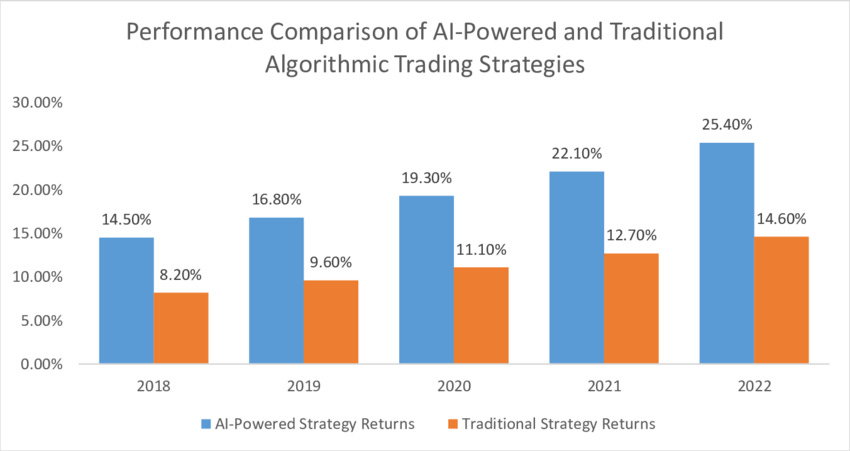
Figure 3: AI-Powered vs. Traditional Algorithmic Strategies (Source: Adapted from ResearchGate, 2024)
Studies show that more than 60% of quantitative traders now use some form of AI in their crypto trading tools, with some claiming up to 70% accuracy in short-term Bitcoin price prediction. It’s easy to see why those statistics create excitement. But, is 70% accuracy a real-world result, or just backtest smoke that looks good on paper but fails under live market pressure? This is the fine line between crypto AI tools that give traders an edge and those that overpromise.
This brings us to the deeper question: are AI systems genuinely smarter than human traders, or are they just faster calculators with dangerous blind spots? Much depends on the quality of the data they are trained on, the state of the market, and whether they are used in isolation or as part of a hybrid trading AI and human model. Many of the best-performing funds today lean toward the hybrid approach, combining human intuition with machine precision.
Limitations of AI in Crypto Trading
For all the excitement around AI crypto trading strategies in 2025, it’s important to be clear that AI is not a crystal ball. Yes, it can process massive volumes of data and react faster than any human, but it also has blind spots that can lead to costly mistakes. Ignoring these limits is how traders end up disappointed, or worse, wiped out.
One of the biggest challenges for AI systems is dealing with black swan events. Those rare, unpredictable market shocks that rewrite the rules in real time. Think back to the sudden collapse of FTX in 2022. No algorithm trained on historical data could have fully prepared for that meltdown. In fact, during the implosion, reports suggest nearly 80% of AI trading bots got caught flat-footed, with only anomaly detection models adapting quickly enough to cut losses. This highlights one of the major risks of AI bots in crypto: they excel in normal conditions but often stumble in chaos.
Another critical weakness is liquidity. Bitcoin and Ethereum enjoy deep, liquid markets where signals are more reliable. But in altcoins, liquidity is thin. Even modest buy or sell orders can distort prices, leaving AI bots vulnerable. A system optimized for BTC/USDT pairs might perform flawlessly, but once shifted to a low-cap token, it can generate false signals that trigger bad trades. This is one of the most overlooked crypto AI trading limitations, and one that can quietly erode returns.
AI models also struggle with market manipulation and fake news spikes. Bots trained heavily on sentiment analysis crypto data can misread pump-and-dump schemes or coordinated waves of misinformation. A sudden flood of bullish tweets might not reflect genuine market sentiment at all, it could just be orchestrated hype. Without human oversight, bots often buy into these moves, only to see prices collapse minutes later.
Finally, there’s the technical flaw of overfitting and lagging models. Many AI bots look spectacular in backtests but collapse in live trading. Why? Because they’ve been tuned too tightly to past data. Others react too slowly in fast-moving markets, producing signals after the opportunity has already passed. This is why AI risk management in trading is essential. No matter how advanced the algorithm, traders need safeguards to keep losses under control.
What’s the biggest AI trading flop you’ve experienced? Drop it in the comments!
AI in Crypto Trading: Competitive Edge or Just Hype?
Traditional strategies like manual technical analysis (TA) and basic quant models still have their place. Human traders bring intuition, context, and the ability to weigh macroeconomic events in ways machines can’t. At the same time, AI excels in speed, scale, and pattern detections, spotting opportunities buried in terabytes of data that no human could process in time.
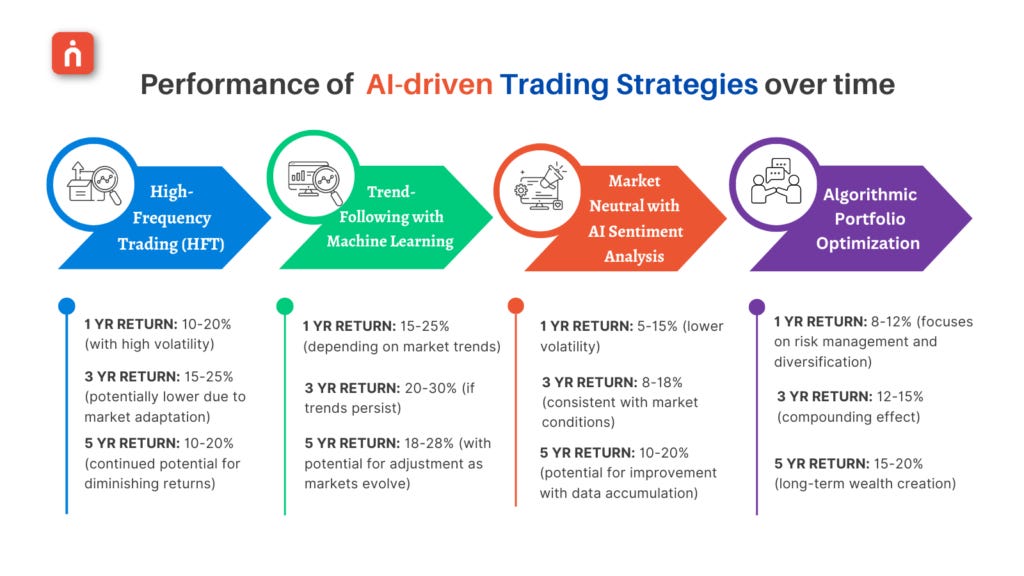
Figure 4: Performance Spectrum of Common AI-Driven Trading Strategies (adapted from Navia, 2024)
The data shows that AI crypto trading strategies in 2025 often boost performance by 10-15% compared to traditional approaches, but the results aren’t always consistent. Some bots shine in high-liquidity environments like Bitcoin or Ethereum. Others break down when faced with thin altcoin markets or unpredictable volatility. That inconsistency is what fuels the ongoing debate about whether AI is an edge or just overblown hype.
One compelling case comes from hedge funds experimenting with hybrid trading AI + human oversight. In one example, a fund reduced drawdowns by 20% after pairing AI-driven signals with human review. The AI provided relentless, data-heavy scanning, while human traders acted as a filter against false signals, market manipulation, or black swan events. This combination proved far stronger than either approach alone.

Figure 5: The Hybrid Intelligence Model (Source: Adapted from Conversion Logix)
To compare the approaches clearly:
AI-only models deliver unmatched speed and data coverage but can be fragile in extreme conditions.
Human-only trading benefits from intuition and context but suffers from slower execution and emotional bias.
Hybrid strategies blend the two, often outperforming both by balancing speed with judgment.
Risks and 2026 Outlook
No serious discussion of AI in crypto trading is complete without looking at the risks. For all its potential, AI also brings vulnerabilities that traders can’t afford to ignore. Being clear-eyed about those risks is the only way to use AI as an edge instead of a liability.
The biggest concerns fall into three categories:
Regulatory clampdowns → Governments around the world are beginning to scrutinize algorithmic and high-frequency trading in crypto. Future regulations could limit how AI crypto trading strategies in 2025 evolve, or even restrict certain forms of automated trading entirely.
AI-driven flash crashes → Fast bots can cut both ways. If multiple AI systems react to the same signal simultaneously, it can trigger cascading sell-offs. This is a well-known issue in traditional markets, and it’s now creeping into AI market making crypto.
Adversarial machine learning attacks → Sophisticated players could manipulate inputs, like sentiment data or order books, to trick AI systems into false trades. This is a new and growing threat, particularly for bots relying heavily on machine learning crypto signals.
Despite these risks, the outlook remains bullish. Analysts project that by 2026, AI will power up to 50% of crypto trading desks, with hybrid AI + human models becoming the standard. The reason is simple: AI offers unmatched speed and coverage, while humans provide judgment and context. They both form strategies that are more resilient than either approach alone.
The worst-case scenario is that AI hype fades, adoption slows, and human traders reclaim the edge. But even then, the tools and frameworks being built today will leave behind valuable infrastructure that will benefit traders’ long term.
Action Plan: How to Test AI in Trading
Understanding how AI works is one thing. Putting it into practice without blowing up your account is another. If you’re considering AI crypto trading strategies in 2025, start small, move methodically, and let the data guide you.
Here’s a simple roadmap:
Start with paper trading: Test AI bots in simulation mode before putting real money on the line. Many platforms allow you to connect bots to demo accounts so you can measure performance risk-free.
Compare signals across providers: Don’t rely on a single bot or platform. Run tests with 2-3 crypto AI tools to see how their signals stack up in real time. This helps you separate genuine edge from hype.
Track performance vs manual trades: Keep a journal of your AI signals against your own manual strategies. This way, you’ll see where machine learning crypto signals outperform, and where human judgment still matters.
Scale gradually with strict risk caps: Once you’re confident, start small and increase exposure slowly. Always cap risk. Seasoned traders recommend no more than 2% of your portfolio per trade. This is the backbone of AI risk management in trading.
Conclusion: Mastering AI Without Blind Trust
The traders who master AI crypto trading strategies in 2025 will ride the next big wave. Those who ignore it, or treat it like a magic box, risk being left behind. The future isn’t about humans versus machines, but about hybrid trading AI + human systems that combine data-driven execution with human intuition.
Subscribe for more trading strategies, real-world case studies, and crypto AI tools that actually work. Stay ahead of the curve and turn technology into your edge.
Disclaimer: This article is for informational purposes only. It does not constitute financial advice, a recommendation to buy, sell, or hold any asset, or an endorsement of any specific strategy. The crypto market is highly volatile and risky. Always do your own research (DYOR) and never invest more than you can afford to lose.